Explorations of Environment and Gender:
The Art For Art Foundation (A4A) invites emerging artists from India to apply for our upcoming virtual residency program, Intersecting Realms: Explorations of Environment and Gender. This virtual residency aims to foster a dynamic exploration of the critical themes of environment and gender, examining how they intersect to shape individual and collective experiences.
ART FOR ART VIRTUAL RESIDENCY & MENTORSHIP 2024
Arindam Manna (b. 1994, Suri, West Bengal) is a visual artist whose practice investigates mobility, temporality, and the shifting landscapes of everyday life. He holds a BFA in Painting from Kala Bhavana, Santiniketan (2014–2018), and an MFA from Shiv Nadar University (2020). Currently based in Delhi, Arindam’s work emerges from long-term research rooted in place, memory, and human experience. His project “Transience and Materiality,” initiated in 2018, draws from encounters along the Grand Trunk Road—from Dadri in Uttar Pradesh to his hometown of Suri in Bengal—unfolding a narrative of lives in flux. Engaging with drawing, video, photography, and installation, his process is immersive and deeply situated, often blurring the line between personal and collective memory. Through performativity, mark-making, and observation, Arindam investigates how time and movement shape spatial realities across rural and urban India.
Mohd. Intiyaz
is a visual practitioner based in Delhi. His body of work is concerned with the ideas of memory, social disparities and politics of control and violence. Being a witness to experiences of displacement at a very young age, along with his family, he had to migrate from Sahibganj (a remote village in Jharkhand, India). Subjected to the harsh living conditions of Delhi slums, he had to constantly negotiate with social disparities and challenges that life had to pose on a day-to-day basis. His work borrows from such lived experiences, challenges and everyday negotiations. His work critically engages with the public and explores varied meanings and events of public gatherings. It is filled with figurative forms, layers, patterns, and camouflage of elements that seek inclination/inspiration from the city’s flora, fauna, architecture and surroundings. He engages with different mediums in his practice, ranging from murals and drawings to installations. He experiments with/ utilizes found objects, upcycled textiles, and sack bags to depict his concerns. His engagement highlights the ignorant attitude of the dominant and simultaneously speculates alternative futures where plurality is embraced.
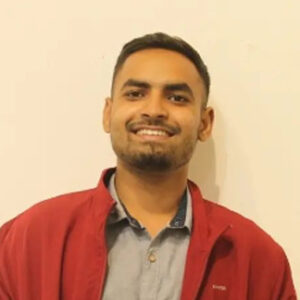
Shilpeksh G Khalorkar
is a visual artist from Amravati, Maharashtra. He holds both Bachelor’s and Master’s degrees in Visual Arts from the Department of Sculpture, Faculty of Fine Arts, Maharaja Sayajirao University (MSU), Baroda. Shilpeksh’s practice is deeply introspective, shaped by personal experiences and psychological states. Drawing from traumatic memories and familial discord, his work navigates themes of anxiety, fear, and existential crisis. Through an evocative use of material and metaphor—particularly the termite’s biting process—he translates internal turmoil into physical form. His art, spanning sculpture and mixed media, often utilizes surfaces like cardboard, wood, and paper to embody the erosion of memory and psyche. By confronting haunting thoughts and emotional turbulence, his practice becomes a space for catharsis, reflection, and transformation.
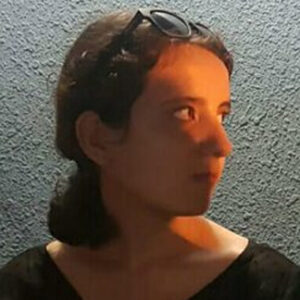
Vanshika Babbar
is a multidisciplinary artist working across video and AR installations, painting, zines, and found media. She holds a Bachelor’s degree in Visual Art (B.V.A) with a specialization in Painting from the Faculty of Fine Arts, Maharaja Sayajirao University, Baroda, and a Master’s degree in Visual Art from the School of Cultural and Creative Expressions, Dr. B. R. Ambedkar University, New Delhi.
Vanshika’s practice is rooted in interrogating middle-class identity, social absurdities under capitalism, and the ideological forces that shape everyday life. Her work navigates the political dimensions of subjectivity—exploring the interface between the personal and social, the referential and experiential. Her paintings often focus on close-ups of faces, transforming them into caricatures that expose hidden tensions and disavowed truths, giving a visual form to structures of power and governmentality. Drawing from found footage, popular imagery, and domestic objects, she assembles her materials into ironic, unresolved contradictions. Humour and contradiction become critical tools—reflecting on the struggle for agency and power, while avoiding reductive binaries of hope and despair.